



The Great Workday Talent Shortage: Finding Skills in a Competitive Market
The enterprise software landscape has witnessed unprecedented growth in recent years, with Workday emerging as one of the most sought-after platforms for human capital management and financial planning. However, this surge in demand has created a significant challenge: a critical shortage of skilled Workday professionals in the market. As organizations increasingly adopt cloud-based HR and financial solutions, the competition for qualified Workday consultants, developers, and administrators has intensified dramatically. This talent crunch is forcing companies to rethink their recruitment strategies and explore innovative approaches to building their Workday capabilities.The Scale of the Challenge
The Workday talent shortage isn’t just a minor inconvenience—it’s a strategic business challenge that’s impacting organizations across industries. Recent market analysis reveals that demand for Workday skills has outpaced supply by nearly 3:1, with specialized roles in Workday HCM, Financial Management, and Planning experiencing the most acute shortages. This scarcity is particularly pronounced in areas requiring deep technical expertise, such as integration development, report writing, and system optimization. Companies are finding themselves in bidding wars for top talent, with salary premiums reaching 30–40% above market rates for experienced Workday professionals. The shortage extends beyond just technical roles. Business analysts with Workday domain knowledge, project managers familiar with Workday implementations, and even testing professionals who understand the platform’s intricacies are in exceptionally high demand.Why Traditional Recruitment Falls Short
Standard recruitment approaches are proving inadequate in this hypercompetitive environment. The traditional model of posting job descriptions and waiting for applications simply doesn’t work when there are more opportunities than candidates. Companies relying solely on external recruitment are experiencing:- Extended hiring cycles that can stretch beyond six months
- Inflated compensation packages that strain budgets
- High turnover rates as professionals are constantly courted by competitors
- Project delays and implementation challenges due to staffing gaps
Innovative Solutions for Talent Acquisition
Forward-thinking organizations are adopting creative strategies to address the talent shortage. One increasingly popular approach is partnering with specialized service providers who can offer immediate access to certified Workday professionals. This partnership model provides several advantages. Companies can access a broader talent pool without the overhead of permanent hiring, scale their teams up or down based on project needs, and benefit from the provider’s investment in ongoing training and certification. Most importantly, it allows organizations to move forward with their Workday initiatives without being constrained by recruitment challenges. Another effective strategy is implementing comprehensive upskilling programs. Companies are investing in training existing employees on Workday technologies, creating internal career pathways that retain talent while building critical capabilities. This approach requires patience and investment but creates a more sustainable talent pipeline.The Role of Automation in Bridging the Gap
While the human talent shortage continues, organizations are increasingly turning to automation to maximize the productivity of their existing Workday teams. Automated testing solutions, for instance, can significantly reduce the manual effort required for system validation and quality assurance. Modern Workday automation tools can handle repetitive testing tasks, regression testing, and continuous monitoring, allowing skilled professionals to focus on higher-value activities like strategic configuration and business process optimization. This approach effectively multiplies the impact of limited human resources. Companies implementing comprehensive automation strategies report 40–60% improvements in testing efficiency and significantly faster deployment cycles. More importantly, automation reduces the dependency on specialized testing skills, making it easier to maintain and support Workday implementations with smaller teams.Building Long-term Talent Strategies
Successfully navigating the Workday talent shortage requires a long-term perspective that goes beyond immediate staffing needs. Organizations should consider developing strategic partnerships with educational institutions to create talent pipelines, implementing mentorship programs to accelerate skill development, and creating attractive career progression paths to retain existing talent. Investment in continuous learning and certification programs is crucial. The Workday platform evolves rapidly, and keeping teams current with new features and capabilities is essential for maintaining competitive advantage. Companies that make this investment often find their employees are less likely to be lured away by competitors.The Path Forward
The Workday talent shortage represents both a challenge and an opportunity. Organizations that adapt their strategies to this new reality—through strategic partnerships, automation adoption, and innovative talent development—will gain significant competitive advantages. The key is to think beyond traditional hiring models and embrace hybrid approaches that combine internal capability building with external partnerships. Companies that master this balance will not only overcome current talent constraints but also build more resilient and scalable Workday capabilities for the future.Ready to Solve Your Workday Talent Challenges?
Don’t let the skills shortage hold back your digital transformation initiatives. At LogicaCloud, we specialize in providing immediate access to certified Workday professionals and cutting-edge automation solutions that maximize your team’s productivity. Our comprehensive approach combines expert consulting services with advanced testing automation technology, ensuring your Workday implementations stay on track regardless of market constraints. We’ve helped dozens of organizations overcome talent bottlenecks and accelerate their Workday success. Contact LogicaCloud today to learn how our proven strategies can help you navigate the talent shortage and achieve your Workday objectives. Visit logicacloud.eu or reach out to our team to discuss your specific challenges and explore tailored solutions.| Cost Category | Impact Factor | Industry Data |
|---|---|---|
| Developer Time on Bug Fixes | 20% of total time | ~€20,000/year per developer |
| Script Maintenance | 30-50% of testing resources | Up to 50% of automation budget |
| Emergency Production Fixes | 4-5x normal fix cost | Up to 100x if post-release |
| Manual Testing Inefficiency | 65% increase vs. automation | Time and cost per Tricentis |
The Automation Advantage: Real Numbers
Organizations that have implemented test automation for their enterprise systems see consistent, measurable improvements. According to a Capgemini survey of automation implementations: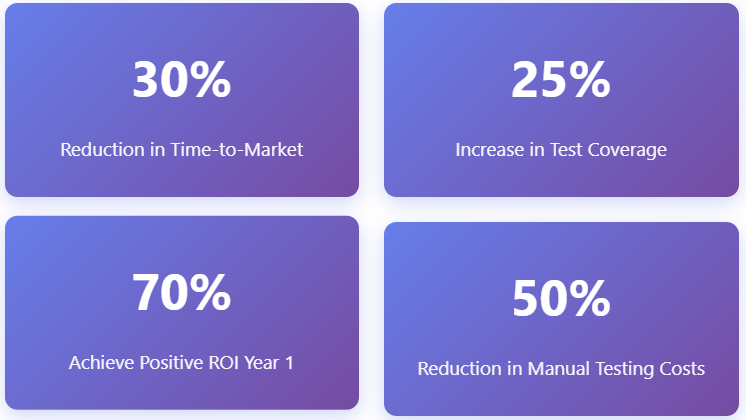
The 65% Efficiency Gap (Industry Benchmarks)
Testing Cycle Time
Annual Cost Impact
Test Coverage
Time Efficiency
Manual Testing
Automated Testing
The 65% Efficiency Gap
Tricentis research reveals a striking finding: organizations relying solely on manual testing experience an average 65% increase in both time and costs compared to those using automation. For Workday’s bi-annual update cycle, this efficiency gap compounds rapidly. Consider the math: If your manual testing cycle takes six weeks and costs €50,000 per update, you’re spending €100,000 annually just on the testing effort itself. With automation, that same coverage could be achieved in 8–10 days at a fraction of the cost—and with better results.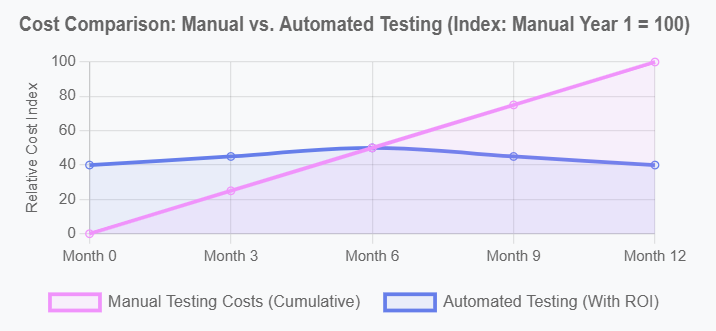
Investment Reality: What Automation Actually Costs
Let’s address the elephant in the room: automation requires upfront investment. Industry data shows typical costs include:- Tool Licenses: €3,000–5,000 per license annually for commercial tools (open-source options available)
- Infrastructure Setup: €10,000–50,000 depending on scale and complexity
- Personnel/Training: €1,000–5,000 per employee for upskilling existing staff
- Ongoing Maintenance: 10–20% of license costs for technical support
Meet ilumn: Purpose-Built for Workday Testing
While industry data proves the ROI of test automation, the real challenge is finding a solution purpose-built for Workday’s unique architecture and bi-annual update cycle. That’s where ilumn comes in. ilumn is LogicaCloud’s intelligent test automation platform designed specifically for Workday environments. Unlike generic testing tools that require extensive customization, ilumn delivers: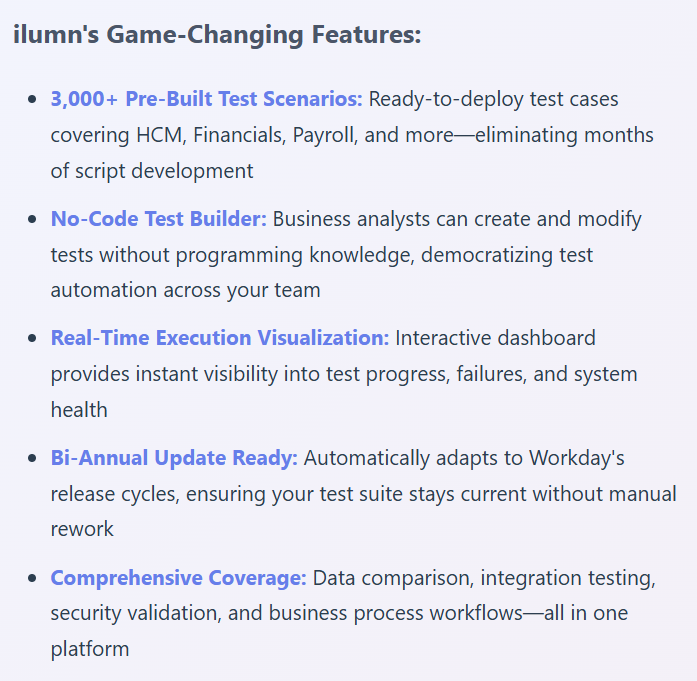
The result? Organizations using ilumn typically achieve test automation coverage of 85%+ within 6–8 weeks—compared to 6+ months with traditional automation approaches.
And because ilumn is Workday-native, you avoid the 30–50% maintenance overhead that plagues generic automation tools.
